

We are experts in AppLogic's/Sandvine’s execution
Our objective is to understand your company and help you meet your precise needs.
AppLogic/Sandvine & BCTI
Networks become more efficient
Rationalize disparate data sources
Enable service differentation
Increase profit margins
BCTI Engineers

Our objective is to understand your company and help you meet your precise needs. To do so, we can custom projects to fit your requirements.
Operators benefit from the power of machine learning, reduces the need for manual intervention, translating into a more efficiently run network, and direct resource and cost savings
- Network Performance Monitoring and Analysis
- Subscriber Service Analysis
- Capacity Planning Analysis
- Video QoE Analysis.
- VoIP and VoLTE QoE Analysis
- Cyber Threat Analysis.-
- Fair Usage and Congestion Management
- Video Streaming Management
- Heavy User Management
- Wholesale and Peering Link Management
- Carrier Grade NetworkAddress Translation (CGNAT)
- Traffic Steering/Diversion
- Usage-Based Services
- Zero-Rating and Application-Based Plans
- Parental Control
- Video and Television Fraud Management
- Interconnect Bypass Fraud
- Data Fraud Management
- Data Revenue Leakage Monitoring
- Regulatory Quality Monitoring
- Regulatory Data Retention
- Regulatory Traffic Management
- Regulatory VoIP Management
- Regulatory Cyber Threat Analysis

Analytics
Network Performance Monitoring and Analysis.- Monitors the metrics that makes the difference to determine if user expectations are met. Increase your customer satisfaction!
"With Network Performance Monitoring and Analysis you can improve QoE, create competitive differentiation, potentially gain market share, reduce churn, and increase profitability."

Analyze and detect new trends!
Today’s Operator challenge: deliver the best possible customer experience. Personalize services and Improve customer engagement. This is accomplished understanding the user network behavior (e.g., web browsing habits, video interests, application popularity, etc.).
Poor service quality, whether real or perceived, is enough for customer to take any action, from calling support line, to consider a new network operator.
- Service Planning: granular user data structured to answer service planning questions, including precise application usage/quality.
- Service Quality Trends: individual users and segmented user groups’ historical QoE key performance indicators.
- Service Quality Troubleshooting: an optional, real-time customer experience view used by customer care teams to identify and resolve quality issues, usage overages, and billing disputes.
With Subscriber Service Analysis operators gain valuable customer-centric insights that are tied to the performance of the network’s most critical and popular services. They can achieve mass personalization, unlocking monetization opportunities and improving customer retention.
Network operators have to plan and expand capacity. But the solution is more complex than simply fattening pipelines; today’s networks are a mix of traditional network elements, caches, and content delivery networks, making it difficult (and expensive) for operators to adapt existing infrastructure.
To make informed decisions about capacity planning and network engineering, today’s network operators need the deepest possible insight into usage trends.
- Unmatched visibility into network traffic and trends.
- Advanced QoE metrics, with granular application visibility, user visibility, and network topology/hierarchy awareness.
Capacity Planning Analysis also provides more visibility into how subscribers are using the network, allowing operators to plan their network strategy for both short- and long-term needs.
Encryption is the second biggest challenge for operators when it comes to video. Thanks to encryption, operators are losing visibility on the once informative video metadata.
Video quality of experience is closely correlated to overall customer satisfaction, operators need true insight into how all types of video is performing on their network.
- Detects and analyzes video streams,
- Monitors the network’s capacity to deliver an ever-increasing amount of video
- Understands end user video quality perception.
With VideoQoE Analysis you can get benefit from visibility into: encrypted video QoE, the root causes of poor QoE, CDN/cache efficacy, and the impact poor video QoE has on churn rates.
With this solution data operators are empowered to make quick and accurate decisions and better understand their VoIP and VoLTE delivery to subscribers.
- Understand call quality experience across the network.
- Complements traditional operational metrics by highlighting individual VoIP application performance
- Provides network operators granular data to monitor voice QoE
Operators can diagnose and troubleshoot poor voice quality and identify the root cause faster and with greater context.
Nowadays it is a big challenge for operators to protect the network from malicious and organized cyber criminals.
- Cyber Threat Analysis : Quantifies malicious traffic and the impact to network capacity.
- Gives an in-depth look at the security threats on the network, answering key questions related to:
- Geolocation-based origin
- Threat types
- Potential users and devices involved
- Number of established and unestablished connections
- Volume/bandwidth impact
Identifying infections earlier, operators can proactively intervene before major problems appear; for instance, by contacting users with infected devices and assisting them with a remediation process.
NETWORK OPTIMIZATION
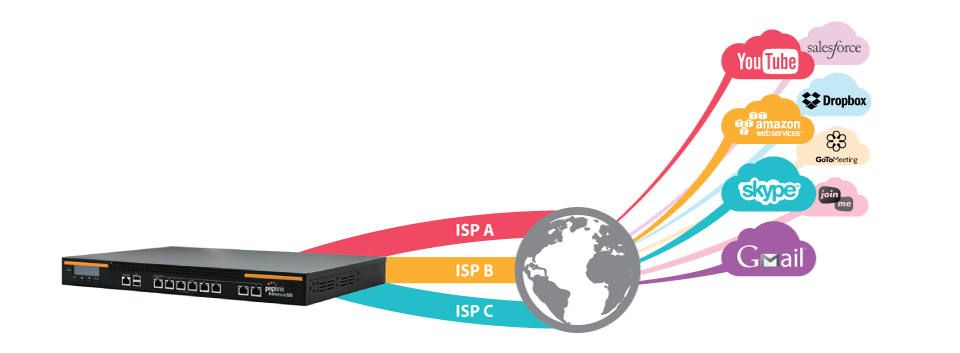
AppLogic/Sandvine has a mechanism to recognize congestion and trigger the appropriate policy that only impacts the exact part of the network or traffic. Enables network operators to balance the traffic and distribute network capacity fairly between users to ensure maximum delivered QoE. Operators can achieve balance between two competing factors – reduced CAPEX/OPEX and good QoE.


Heavy user management
This typically small segment of users can account for a disproportionate amount of network bandwidth, essentially taking more than their fair share.
Network operators can ensure shared network resources remain available for all users by:
- 1.- measuring usage over a defined period (e.g., by day, by week, by month, by rolling window)
- 2.- linking management policies to different factors (e.g., time of day, risk of congestion, number of users on a resource).

Wholesale and Peering Link Management
By carefully managing traffic on wholesale and peering links, network operators can precisely control costs and even improve the QoE for all network users.
This use case gives operators the necessary visibility (for example, a view of where traffic is flowing and of the performance of links) to smooth traffic for better QoE and cost control.

Carrier Grade NetworkAddress Translation (CGNAT)
Mitigate IPv4 address exhaustion while maintaining network visibility. An intelligence-based solution, bringing subscriber awareness for end-to-end service visibility and delivering comprehensive analytics, reporting, and user logging capabilities that can be updated with both the internal address and the external representation.

Traffic Steering/Diversion
Redirects highly specific application, protocol, and subscriber traffic with great precision, ensuring only the desired flows are diverted to the network service node.
This solution allows operators to:
- Reduce the number of inline elements, streamlining operations and providing higher availability at a lower cost.
- Support network actions that require granular intelligence such as user-based opt-in video optimization.
REVENUE GENERATION

Usage-Based Services
Increase revenue by launching innovative service plans based on perceived value and user behavior Users only want to pay for data they actually use and want the cost-certainty associated with volume-based plans. There is no “one plan fits all” to accommodate all users, so the ability to personalize plans and offer compelling service offerings with flexibility is the winning strategy. By deploying Usage-Based Services with AppLogic's/Sandvine's Quota Manager, operators can add advanced options to create further differentiated service offerings, with the industry’s lowest TCO.
Zero-Rating and Application-Based Plans
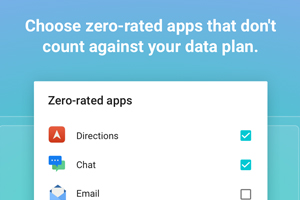
The key distinction between zero-rating and application-based plans is that application-based plans allow operators to offer specific applications versus entire service categories, which is critical when operating in highly regulated markets. Accuracy and granularity that is unmatched due to advanced machine learning of encrypted traffic.

Video and Television Fraud Management
AppLogic's/Sandvine’s leading traffic classification technology – backed by domain experts conducting active research – provides network operators with the insight needed to make informed strategic decisions relating to video and television piracy.

Parental Control
Is a highly personalized, differentiated network-based solution that can generate revenue and deliver “good citizen” branding for operators.

Interconnect Bypass Fraud & Data Fraud Management
AppLogic's/Sandvine’s advanced heuristics, machine learning capabilities, and vast OTT signature library can differentiate between authorized OTT VoIP apps and fraudulent or illegal OTT VoIP app calls.
Data Fraud Management Solution leverages best- in-class traffic classification, analytics, and policy enforcement to detect and mitigate zero-rated fraud techniques to preserve legitimate revenue for network operators

Data Revenue Leakage Monitoring
AppLogic/Sandvine provides operators an additional set of eyes in the network to accurately measure usage and to detect problems in the control and charging planes. The granularity of AppLogic's/Sandvine’s network intelligence simplifies the process of reconciling revenue leakage, as it can give insights on where the OSS system is incorrectly identified – whether the issue is plan, network, or configuration-related for users whose behavior is unusual.
REGULATORY COMPLIANCE

Regulatory Quality Monitoring
For this use case, ScoreCard measures all data traffic, all the time, and determines the actual performance delivered to the network’s users, regardless of access technology (e.g., DSL, Cable, Mobile, Satellite, WiFi).

Regulatory Data Retention
For this use case, ScoreCard measures all data traffic, all the time, and determines the actual performance delivered to the network’s users, regardless of access technology (e.g., DSL, Cable, Mobile, Satellite, WiFi).

Regulatory Traffic Management
Identify applications and block or rate-limit any identifiable application or service. This policy can be applied network-wide or even down to an individual subscriber service plan basis.
Regulatory VoIP Management
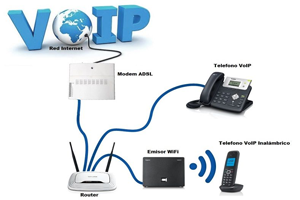
This solution provides the broad functionality and flexibility needed to deliver reliable compliance, while also preserving the ability to adapt to changing regulations, traffic makeup, and usage patterns.

Regulatory Data Insights
In most (if not all) countries, network operators are required to provide specific data when presented with a warrant by law enforcement. The protection of this data – both from a privacy as well as a legal perspective – is crucial for consumers and the LEAs.
Based on AppLogic's/Sandvine’s key data capabilities, including granular and efficient data collection, which identifies and delivers only the lawfully authorized data.

Regulatory Cyber Threat Analysis
Detect threats and secure national infrastructure from external and internal cyber attacks.
This solution:
- Measures the infection level of the network
- Locates the origin of threats
- Categorizes the type of malicious traffic
- Reports the bandwidth amount impacted
- Identifies infected users and devices